Why Can't I Sleep at 45? Perimenopause Insomnia, Explained
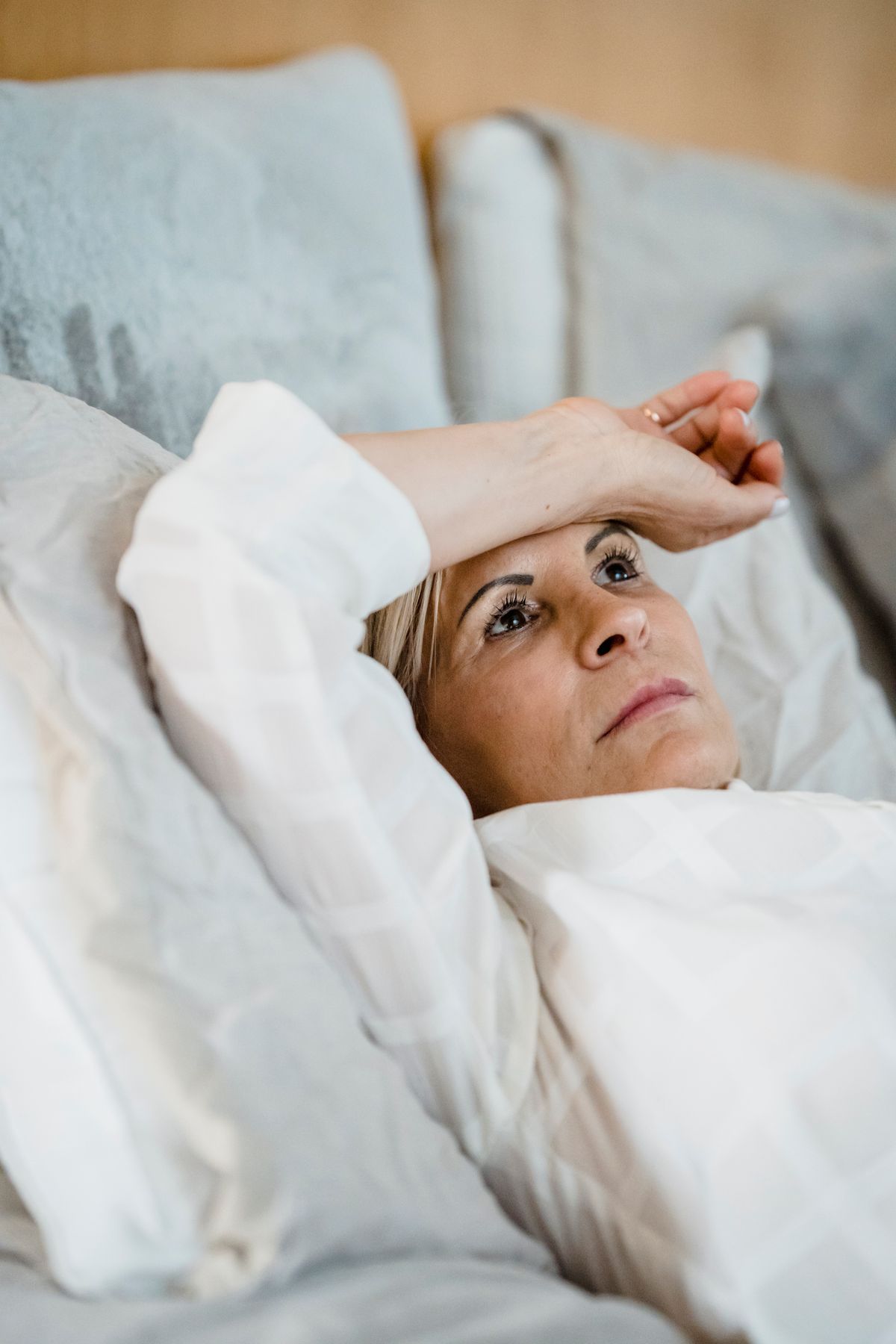
If you can't sleep at 45, you're almost certainly in perimenopause. Estrogen and progesterone start fluctuating irregularly 4 to 8 years before your final period, and sleep is often the first thing to break — before hot flashes, before cycle changes. It is real, it has a physiology, and there is a lot you can do about it.
The first time it happened, I lay there doing the arithmetic on how many hours I had left before the alarm — 2:40 a.m., then 3:10, then 4-something — night after night, for no reason I could name. So before a single word of the science, let me say the part that matters most: you're not broken, and you're not doing this alone.
You used to be a good sleeper. Then, sometime in your mid-40s, your nights turned on you. You fall asleep fine and jolt awake around 3 a.m. Or you can't fall asleep at all — you're tired, your body knows it's tired, and your brain refuses to cooperate. Nothing has changed on paper. No new medication, no move, no baby, no crisis.
What changed is invisible: your hormones. And it started earlier than most women (and, frankly, most doctors) realize.
What exactly is perimenopause — and why does it show up at 45?
Perimenopause is the transition into menopause. The word literally means "around menopause." It typically starts in a woman's early to mid-40s and lasts, on average, 4 to 8 years, though for some women it stretches to a decade. Menopause itself is a single day: the 12-month anniversary of your last period. Everything before that is perimenopause. The average American woman reaches menopause at age 51, per the National Institute on Aging, which means perimenopause is often in full swing at 45.
During this window, your ovaries don't shut down neatly. They sputter. Estrogen surges and crashes. Progesterone drops steadily. Your once-predictable hormonal rhythm becomes chaotic. And because those hormones do a lot of quiet work supporting sleep, mood, and body temperature, the chaos shows up in your nights first.
Why do fluctuating hormones ruin sleep specifically?
Three mechanisms, working together:
Progesterone loses its calming effect
Progesterone acts on GABA-A receptors — the same brain system that anti-anxiety and sleep medications target. It has a natural sedative effect. As progesterone drops in perimenopause, that free-of-charge nightly sedation disappears. Many women describe it as "I used to just fall asleep. Now sleep is something I have to work at."
The thermostat becomes hair-trigger
Estrogen helps the hypothalamus maintain a stable core temperature at night. As estrogen fluctuates wildly in perimenopause, your body's thermal comfort zone narrows dramatically. You can go from perfectly comfortable to soaked in sweat in minutes, even if the objective bedroom temperature hasn't changed. Those night sweats yank you out of deep sleep repeatedly, often without you fully remembering.
Cortisol drifts earlier
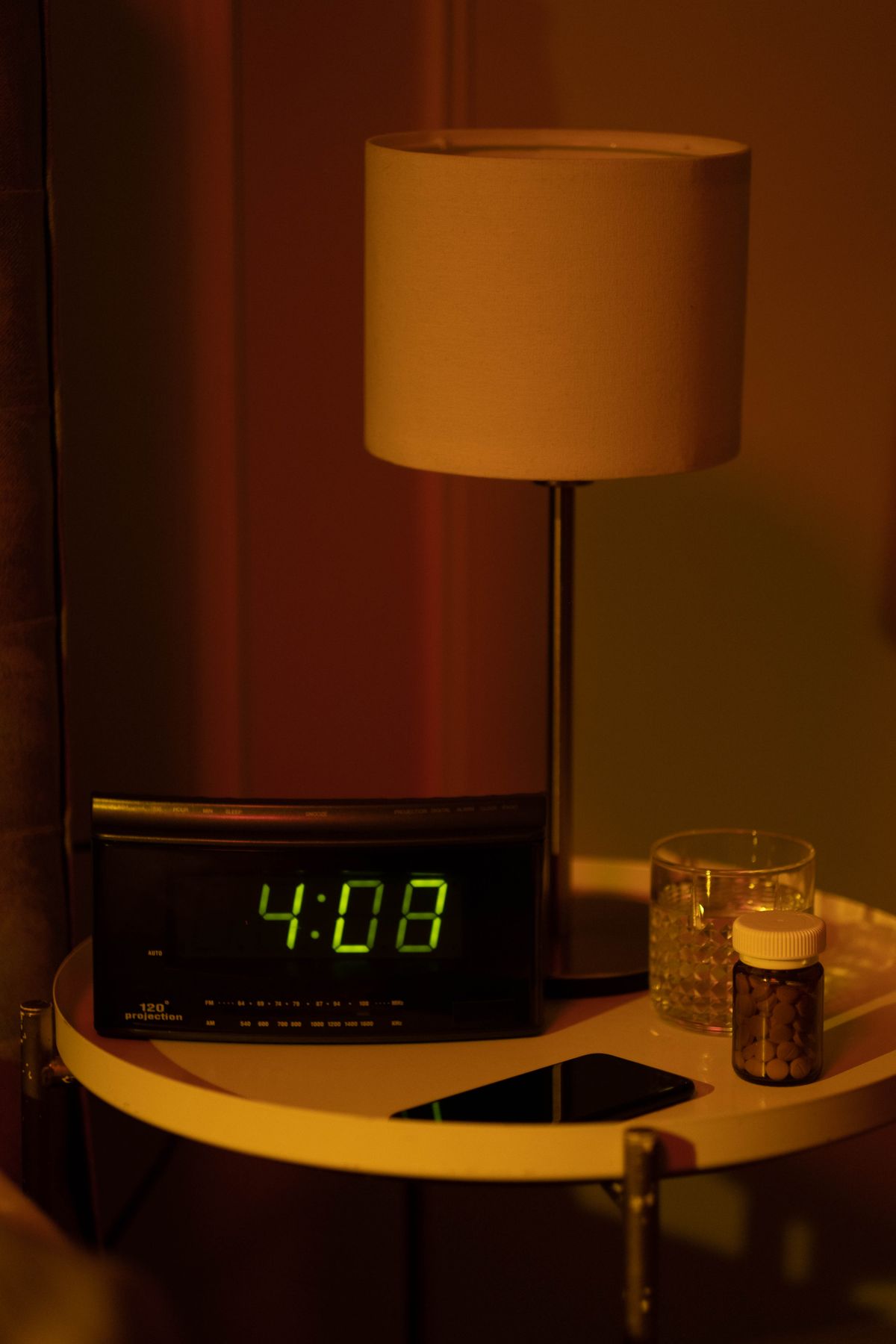
Estrogen also modulates your cortisol rhythm. As it falls, cortisol tends to spike earlier in the morning. That is why the classic perimenopausal wake-up is between 3 and 5 a.m., wide-eyed, sometimes with a racing mind, unable to return to sleep.
How common is this, really?
The SWAN Study tracked thousands of American women through the menopause transition and found that sleep complaints rose sharply as women entered perimenopause — and they didn't fully resolve for years. If you are 45 and sleeping badly, you are not an outlier. You're statistically typical for your stage.
Here's the part that makes it feel so isolating, though: it's both extremely common and rarely named out loud. Perimenopause is diagnosed by symptoms rather than a lab test, sleep is the symptom women are least likely to connect to their hormones, and it often arrives years before the hot flashes that finally make the transition obvious. So millions of women are having the same 3 a.m. experience in parallel, each quietly assuming she's the only one — or that she's simply becoming a "bad sleeper." You're not. You're on a well-documented curve that thousands of researchers have already mapped.
What are the tell-tale signs it's perimenopause and not just stress?
Stress and perimenopause both cause insomnia, and they often work together. But there are patterns that point more strongly at perimenopause:
- Sleep changed noticeably in your 40s without a corresponding life event.
- Your cycle length is shifting — shorter, longer, heavier, lighter, or unpredictable.
- You get warm at night in ways you didn't in your 30s, even if it's not full-blown hot flashes yet.
- Your PMS has intensified, or you feel new anxiety in the week before your period.
- The middle-of-the-night wake-up is the dominant pattern, more than trouble falling asleep.
- Caffeine, alcohol, or a stressful evening now wreck your sleep in a way they didn't 10 years ago.
If three or more of those apply, perimenopause is very likely part of the picture — even if your primary care doctor says your labs are "normal." (Perimenopause is diagnosed by symptoms, not labs. Hormones fluctuate too much day to day for a single blood draw to be conclusive.)
What should you actually do first?
Start with the changes that cost nothing and have the strongest evidence base. In this order:
- Drop your bedroom temperature to 65°F (18°C). The Sleep Foundation recommends 60–67°F for adults. For a perimenopausal woman, err cold. Breathable natural-fiber sheets. A fan is not a luxury; it's a tool.
- Fixed wake time, seven days a week. Not bedtime — wake time. Circadian rhythms are anchored by morning light and consistent waking. This alone will move the needle within two weeks.
- Stop alcohol within three hours of bed. Alcohol is a sleep sabotage machine in perimenopause. It fragments sleep architecture and reliably triggers night sweats.
- Track for 14 nights. Bedtime, wake time, night wakings, how you felt the next day. A simple notebook is fine.
- Then, if it hasn't improved, book a visit — ideally with a NAMS Certified Menopause Practitioner. Bring the log.

What should you avoid doing?
- Don't stack sleep supplements randomly. Melatonin plus magnesium plus valerian plus CBD plus an antihistamine is not a strategy. Add one thing at a time, evaluate for two weeks.
- Don't lie in bed awake for hours. If you're up past 20 minutes, get out of bed. Lying in bed anxious teaches your brain that bed is a place of arousal.
- Don't accept "it's just aging." Aging alone does not cause the kind of sleep disruption most perimenopausal women describe. That's a hormonal transition, and it deserves proper attention.
The women who sleep well through midlife aren't the ones with the strongest willpower. They're the ones who understood what was happening, made the environmental changes early, and asked for medical help without shame when they needed it.
How long will the sleepless nights last?
This is the question every exhausted 45-year-old actually wants answered, and the honest version has two halves. Perimenopause itself lasts about 4 to 8 years, and sleep tends to be roughest in the couple of years right around your final period, when the estrogen swings are widest. For many women, sleep settles again within a few years after menopause, as hormones stop fluctuating and find a new, lower, steadier baseline.
But "wait it out" is not the plan. Two things are true at once: the hormonal storm is temporary, and the sleep habits you build now decide how hard those years actually feel. Women who make the environmental changes early, treat the hot flashes that are fragmenting their nights, and ask for help before insomnia becomes a nightly identity tend to sleep meaningfully better the whole way through — not just at the far end.
The trap to avoid is letting short-term insomnia harden into chronic insomnia — a self-sustaining loop of dread, clock-watching, and trying too hard that can outlive the hormones that started it. That loop is exactly what CBT-I is designed to break, and it's why acting early matters more than waiting for a particular number on the calendar.
Where to go from here
If you want the full map — every intervention, ranked by evidence — read our complete guide to perimenopause and menopause insomnia. If the 3 a.m. wake-up is your specific problem, jump to how to fall back asleep at 3 a.m.. And if you take one thing away from this article, let it be this: sleep changes at 45 are not your fault, they are not permanent, and you have more leverage over them than the internet often lets on.
Frequently asked questions
Is it normal to suddenly have insomnia at 45?
Yes. The mid-40s are the single most common onset window for perimenopausal sleep disruption. Sleep is often the first perimenopause symptom, before hot flashes or cycle changes.
How do I know if my insomnia is perimenopause and not just stress?
You often can't separate them cleanly, and you don't have to. Perimenopause makes your nervous system more reactive to the stress you used to manage easily. If sleep changed noticeably in your 40s without an obvious life event — especially with cycle changes, night sweats, or new anxiety — perimenopause is a strong candidate.
What should I do first if I think perimenopause is wrecking my sleep?
Start with three no-cost changes tonight: drop the bedroom to 65°F, set a fixed morning wake time seven days a week, and stop drinking alcohol within three hours of bed. Track your sleep for two weeks. If it hasn't improved, book a visit with a menopause-informed clinician and bring the log.
Can I still be in perimenopause if my periods are regular?
Yes. Early perimenopause can include sleep disruption, mood changes, and mild warmth at night years before your cycles become obviously irregular. The hormonal fluctuations are already happening.
Is it too early for hormone therapy at 45?
Not necessarily. Hormone therapy isn't prescribed for insomnia alone, but if hot flashes and night sweats are fragmenting your sleep, it can help — and starting within 10 years of menopause is generally considered favorable. It's a conversation for a menopause-informed clinician, not a self-diagnosis or a decision to fear.
Sources cited
- National Institute on Aging. What Is Menopause? nia.nih.gov
- Kravitz HM et al. Study of Women's Health Across the Nation (SWAN) sleep analyses. Sleep Medicine Clinics, 2018.
- The North American Menopause Society (NAMS). menopause.org
- Sleep Foundation. Best Temperature for Sleep. sleepfoundation.org
- SWAN Study. swanstudy.org

Ellen Hayes
Health & Wellness Writer and Researcher
Hi — I'm Ellen. If you're reading this at some ungodly hour because your brain flipped on at 3 a.m. and won't shut off… I get it. I'm right there with you. I'm somewhere in the middle of midlife, deep in perimenopause, and lately sleep and I have a complicated relationship.
I'm not a doctor. I'm not an expert — and I'm never going to talk down to you like one. I'm just a woman who got tired of vague answers ("it's just your age," "try to relax") and decided to actually read the research myself. Then I write it down here, in plain English, the way I'd explain it to a friend over coffee. More about Ellen →